Water transport safety experts have called on the Ugandan government to introduce mandatory safety training for island communities and residents of landing sites to curb rising drowning deaths, particularly among children and young adults.
The appeal comes as Uganda’s waters have been described by the World Health Organization (WHO) as among the riskiest in the world, with drowning deaths steadily increasing over the past few years.
Francis Muvunyi, a water transport safety expert from Reach A Hand Uganda (RAHU), warned that the country could soon see daily drowning deaths rise from the current eight or nine to as many as 10 if urgent action is not taken.
“We are currently losing eight to nine people every day which totals to more than 3,000 deaths every year,” Muvunyi said. “People are drowning as they cross from one island to another to access services like education, health facilities and markets. These communities need basic skills to protect themselves when they are drowning and to help rescue others.”
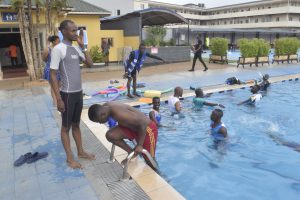
Muvunyi and Charles Okao, the Global Health Advocacy Incubator (GHAI) media coordinator, made the remarks on Saturday during a safety swimming training for journalists from various media houses in Kampala.
According to surveys conducted by WHO, Makerere University School of Public Health (MakSPH) and RAHU, Uganda’s annual drowning deaths have increased from about 2,000 five years ago to more than 3,000 currently.
Okao warned that without immediate interventions, the number could rise to about 4,000 deaths annually by 2030.
“You have people who move daily on the water to access services or go to work,” Okao said. “If they cannot afford standard safety gear like life jackets recommended by WHO, then they should be given basic swimming and rescue skills. This can significantly reduce deaths by drowning.”
He noted that islanders, fishermen and other residents whose livelihoods depend on water transport remain particularly vulnerable due to lack of safety equipment and limited swimming skills.
GHAI, RAHU and Design Without Borders (DWB), in collaboration with MakSPH, are currently training journalists to improve reporting on drowning, which the WHO has declared a global public health problem.
The experts also called for stricter enforcement against hazardous structures such as uncovered pit latrines, septic tanks, brick-making ponds and unprotected swimming pools, which they say are among the common sites where children and young adults drown.
They stressed that strengthening safety awareness, enforcing regulations and providing basic survival skills could significantly reduce drowning deaths across the country.