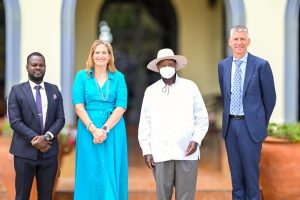
By Eric Kyama: When President Yoweri Museveni addressed supporters after another wave of criticism from Western governments, his message was familiar: Uganda, he insisted, would not be dictated to by foreign powers. To his administration, Western governments have increasingly crossed the line between partnership and interference. To many of Uganda’s Western allies, however, their concerns are rooted in democracy, governance and human rights.
This divergence has become one of the defining features of Uganda’s foreign policy in recent years—transforming what was once a close development partnership into a complicated diplomatic balancing act. For decades, Uganda occupied a privileged position in Western capitals. The country was praised for restoring stability after years of political turmoil, spearheading regional peacekeeping missions, and hosting one of Africa’s largest refugee populations.
Billions of dollars flowed into Uganda through health, education, security and governance programmes, particularly from the United States, the European Union and the United Kingdom.Today, that relationship is under unprecedented strain.
From strategic ally to diplomatic friction
The shift did not happen overnight. Western governments have repeatedly voiced concern over Uganda’s political environment, citing restrictions on opposition activities, arrests of political activists, media freedoms, and allegations of excessive use of force by security agencies. International human rights organisations argue that civic space has steadily narrowed, with journalists, protesters and opposition figures facing increasing pressure.
Ugandan authorities reject these accusations. Government officials argue that many Western statements overlook Uganda’s security challenges, including terrorism threats, regional instability, and efforts to maintain public order. They maintain that every sovereign state has the right to enforce its laws without external political pressure. That disagreement has steadily spilled into diplomatic exchanges.
The human rights divide
Perhaps no issue has widened the gap more than human rights. Western governments have criticised Uganda over political freedoms, treatment of opposition leaders, freedom of expression and legislation affecting minority groups. Reports by organisations such as Human Rights Watch and Amnesty International have documented concerns over arbitrary arrests, military trials of civilians, surveillance, and restrictions on peaceful assembly.
Ugandan officials frequently dismiss such reports as selective, politically motivated or disconnected from local realities. President Museveni has repeatedly argued that Uganda’s social values, constitutional order and national priorities should not be subjected to external pressure. Government spokespersons often frame Western criticism as an attempt to export foreign cultural and political values. The result has been a growing diplomatic narrative centred on sovereignty.
Aid with conditions
The diplomatic tension has also affected development cooperation. Several Western partners have reviewed or redirected aid programmes following concerns about governance and human rights. Rather than withdrawing entirely, many donors have increasingly channelled assistance through humanitarian organisations, multilateral agencies and civil society groups instead of direct government systems.
Yet the relationship remains far from broken. The United States continues to support major health initiatives in Uganda, while European countries remain significant development partners. Uganda also remains an important security ally in East Africa, contributing troops to regional peacekeeping missions and cooperating on counter-terrorism. This mutual dependence explains why diplomatic disagreements rarely result in complete disengagement.
Looking east
As relations with some Western governments cooled, Uganda accelerated efforts to diversify its international partnerships. China has expanded investments in infrastructure, including roads, energy and industrial projects. Russia has strengthened cooperation in defence and energy, while Middle Eastern countries have become increasingly important sources of investment, labour markets and development financing.
Political analysts say this diversification gives Kampala greater diplomatic leverage. Rather than depending exclusively on Western funding, Uganda now has alternative economic and strategic partners, reducing the effectiveness of traditional diplomatic pressure.
Still, Western countries remain among Uganda’s largest development partners and export markets, making a complete diplomatic pivot unlikely.
The politics of sovereignty
The government’s recent emphasis on protecting national sovereignty has further sharpened diplomatic tensions. Officials argue that foreign-funded organisations should not influence Uganda’s political processes, while critics contend that proposed and enacted measures could restrict civil society and independent advocacy. Human Rights Watch and other organisations have warned that such legislation could further limit civic freedoms, while government leaders insist it is necessary to safeguard national interests.
The debate illustrates a broader philosophical divide. Western governments generally frame democracy and human rights as universal principles deserving international attention. Ugandan leaders increasingly frame these same discussions as matters of domestic jurisdiction and national sovereignty.
Beyond diplomacy
The consequences extend beyond government offices. Diplomatic disagreements can influence foreign investment, tourism, development assistance and Uganda’s international image. Investors often monitor political stability and governance indicators alongside economic opportunities.
At the same time, Uganda continues to project itself as a regional stabiliser—hosting refugees, participating in peacekeeping missions and mediating conflicts within the Great Lakes region. These competing realities create a paradox: Uganda remains strategically indispensable to many Western governments even as political disagreements deepen.
A relationship neither side can ignore
Despite recurring tensions, neither Uganda nor its Western partners appears prepared to sever ties. Western governments recognise Uganda’s importance in regional security, refugee protection and public health. Uganda, meanwhile, continues to benefit from Western investment, trade, development assistance and diplomatic engagement. The relationship has therefore evolved—not from partnership to hostility, but from predictable cooperation to cautious negotiation.
As Uganda asserts a more independent foreign policy while Western governments continue to raise concerns over governance and human rights, diplomacy increasingly revolves around managing differences rather than eliminating them. For now, the challenge is not whether the relationship will survive, but whether both sides can find common ground between sovereignty and accountability—a balance that may shape Uganda’s international standing for years to come,