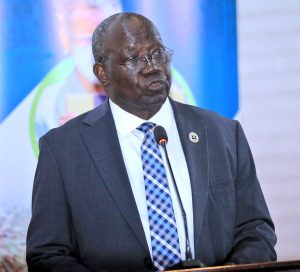
The Uganda National Examinations Board (UNEB) has released the 2025 Uganda Advanced Certificate of Education (UACE) examination results, highlighting a substantial rise in candidate numbers and slight improvements in overall performance. The examinations were conducted between November 10 and December 5, 2025, and the results were formally presented to the Minister of Education and Sports.
According to UNEB, 166,400 candidates registered for the 2025 UACE examinations, marking an increase of 24,404 candidates (17.2 percent) compared to the 141,996 candidates registered in 2024.
Of those registered, 165,172 candidates actually sat the examinations, while 1,228 candidates (0.7 percent) were absent, a slight improvement from the 0.8 percent absentee rate recorded the previous year.
Among those who took the exams, 72,374 candidates were female (43.8 percent) while 92,798 were male (56.2 percent), showing that male participation at A-Level remains significantly higher than female participation. UNEB also reported an increase in examination centres, which rose from 2,255 in 2024 to 2,452 in 2025, reflecting the growing number of students pursuing advanced secondary education.
The Board noted that since the COVID-19 disruptions ended, the number of candidates sitting UACE has increased sharply from 96,557 candidates in 2022 to 165,172 in 2025, representing a 71 percent rise.
The results show that 98.9 percent of candidates qualified for the UACE certificate, meaning they obtained at least a Subsidiary pass in a Principal subject. In terms of performance levels, 68,906 candidates (41.7 percent) earned three Principal passes, while 44,385 candidates (26.9 percent) obtained two Principal passes.
Another 31,838 candidates (19.3 percent) achieved one Principal pass, while 18,152 candidates (11 percent) earned only Subsidiary passes. A total of 1,891 candidates (1.1 percent) failed the examination. Overall, the Board observed an improvement in performance compared to 2024, particularly in the number of candidates attaining higher-level passes.
With two Principal passes still considered the minimum requirement for admission to degree programmes, 113,291 candidates (68.6 percent) now qualify for university admission, compared to 92,273 candidates (65.5 percent) last year. This increase means universities may need to create over 21,000 additional spaces to accommodate the larger number of eligible students.
Meanwhile, 145,129 candidates (87.9 percent) qualify for admission into other tertiary institutions such as diploma programmes offered under technical and vocational education and training.
Despite their smaller numbers, female candidates performed better proportionally than male candidates at the higher performance levels. Among female candidates, 44.6 percent achieved three Principal passes, compared with 39.5 percent of male candidates.
Female candidates also recorded a lower failure rate of 0.8 percent, while 1.4 percent of male candidates failed the examination.
UNEB noted that female students generally performed better in most Humanities subjects as well as in General Paper, Mathematics, Physics, Subsidiary Mathematics, and Subsidiary ICT at the principal pass level. However, male candidates still dominated the top A grades in Mathematics and Science subjects.
The Board also reported continued growth in enrolment for science and mathematics subjects. In 2025, 70,132 candidates sat Mathematics, an increase from 58,495 in 2024. Chemistry entries rose to 37,134, while 35,660 candidates sat Biology.
Although entries for Physics remained relatively high, they slightly declined compared to the previous year. Female participation in science subjects has also been increasing gradually over the past five years, although the number of female candidates remains significantly lower than that of males, particularly in Physics.
Performance improved in several subjects, including Mathematics, Chemistry, Agriculture, Geography, Economics, Biology, and Literature in English. However, examiners reported a decline in results in Entrepreneurship Education, Christian Religious Education, Fine Art, and Physics.
According to UNEB, many candidates still face challenges in interpreting questions and applying theoretical knowledge to real-life situations, particularly in Humanities subjects. In science subjects, examiners highlighted persistent weaknesses in practical work, data interpretation, and connecting scientific concepts to real-life applications.
The Board registered 540 candidates with special needs in the 2025 examinations, an increase from 437 candidates in 2024. These included students who were blind, visually impaired, deaf, physically disabled, dyslexic, or those with medical conditions requiring special consideration.
Additionally, 70 inmates from Uganda Government Upper Prison in Luzira registered for the examinations, with 68 eventually sitting the papers. Among the inmates, 31 candidates obtained three Principal passes, while 66 qualified for the UACE certificate.
UNEB reported that 351 cases of examination malpractice were recorded in 2025, representing 0.2 percent of all candidates across 47 examination centres. The most common offences included possession of unauthorized materials, impersonation, and receiving assistance during science practical examinations. The results of the affected candidates have been withheld pending investigations.
Schools can download their results through examination centre portals, while candidates and parents can also access them via SMS. To obtain results through mobile phones, candidates should send their index number to 6600 using either MTN or Airtel networks. Hard copies of the results will be available for collection from UNEB offices in Kyambogo next week.