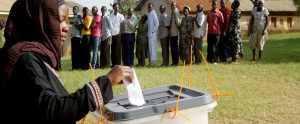
The 2026 general elections cycle officially closed on February 4, but it has left several people in pain because of their spouses, sons, daughters, and relatives who were shot dead by police and military personnel manning the polling exercise across the country.
The Police Political Crime Desk recorded more than 20 deaths connected to the just-concluded election period between January 13 and February 1, 2025. Uganda went to the polls on January 15, starting with presidential and parliamentary ballot casting, which was later followed by local government votes.
At least seven districts are listed among those with the highest election-related deaths in the 20 days of ballot casting. These districts include Butambala, Mukono, Luweero, Kamuli, Buikwe, Kayunga, Bukedea, Kalungu, and Wakiso. Apart from Bukedea and Kamuli, the rest of the districts recorded deaths at the hands of security personnel.
In their speeches at Tarehe Sita on Friday, President Yoweri Museveni and his son, Gen Muhoozi Kainerugaba, the Chief of Defence Forces (CDF), extolled the Uganda People’s Defence Forces (UPDF) and sister security agencies for decisively dealing with alleged election saboteurs.
“We are celebrating Tarehe Sita, but we are also celebrating the victory we recently had in the elections. I commend the UPDF and other security agencies for maintaining peace during the electoral period. The security forces effectively neutralised groups with intent to cause instability,” Museveni said.
Museveni maintains that some politicians had gathered groups to antagonise the country by attacking security personnel. Butambala is one district Museveni has repeatedly referred to as a place where groups attacked security officers and, as a result, were neutralised.
However, all information on the ground, including findings gathered by security officers sent to investigate the Butambala incidents in which people were killed, has confirmed that they were killed inside the home of area MP Muhammad Muwanga Kivumbi.
MP Yusuf Nsibambi of Mawokota South in Mpigi says the President was misled and needs to set up an inquest to establish the truth. Nsibambi has claimed that he told the President during their recent meeting at State House, Entebbe, that what he was told about Butambala was not true.
“We met the President to talk about many people arrested during the elections, including Honourable Muwanga Kivumbi. I told him to order a special inquest into the Butambala incidents so that he can know the truth. On political prisoners, the President said he has no power until they are convicted by courts,” Nsibambi told the media.
Although it is already proven beyond doubt that the Butambala security killings occurred inside MP Muwanga Kivumbi’s house, what remains unclear is what prompted soldiers to raid the legislator’s home with such force, leading to the killing of seven people. Nonetheless, Kivumbi and some locals claim that 10 people were killed at his home, not seven as Police Spokesperson ACP Kituuma Rusoke explained.
Milly Nampeereza, Shafic Miiro, and Aisha Nakanjako are among the people killed in Butambala during the night hours after the presidential and parliamentary elections. Tadeo Kirunda and Musa Kasiita, the sons of the late Nampeereza, said their mother was a close friend of MP Muwanga Kivumbi and went to his home to wait for victory.
“We waited for her to return home in vain. The next day, we were informed that there were women among the people killed at MP Kivumbi’s home. We went there, and when people saw us, they came to comfort us. They showed us the clothes our mum was wearing on that fateful night. We identified them,” Kirunda told the media.
Kasiita said Nampeereza was the only parent they knew and their sole breadwinner. The children refute claims that their mother was killed as part of a group attacking soldiers and police officers. They are residents of Kyanajjanja village, Kawuku Parish, Butambala District.
Badru Nsubuga, the father of the late 25-year-old Shafic Miiro, said his son was a boda boda rider who met his death at MP Muwanga Kivumbi’s home. Nsubuga insists his son did not participate in any riot or attack on soldiers or police officers but was excited because his friend, MP Muwanga Kivumbi, was leading.
“He left his wife in their rented house and went to MP Muwanga Kivumbi’s home to celebrate his victory. Kivumbi was leading in many areas, and he chose to go there. I was later informed that he had been killed. He has left behind a pregnant wife, and I don’t know what to do,” Nsubuga told the media.
Miiro was buried at Lubugo-Lugoye village, Kibibi Town Council. Similarly, Aisha Nakanjako’s husband, Joseph Kyeyune, has vehemently dismissed accusations that his wife participated in attacks on soldiers and police officers.
Like Nsubuga, Kirunda, and Kasiita, Kyeyune wonders why security agencies and the President insist that their people were killed in confrontations with security personnel, yet they were killed at MP Muwanga Kivumbi’s home. Nakanjako was buried at Bujumba village, Katabiro Parish. She left Kyeyune with five children.
Despite the more than 20 killings, CDF Gen Muhoozi Kainerugaba has described the 2026 general elections as the most peaceful since 1996, commending Ugandans for exercising their democratic rights calmly.
“Save for a few isolated cases, security was maintained across the country, allowing voters to carry out their civic duty in a calm and secure environment,” Gen Muhoozi said on Friday during the Tarehe Sita celebrations.
Not only people from Butambala are refuting allegations by Gen Museveni and Gen Muhoozi that the killed persons were part of schemes to ransack security forces and cause havoc during elections, but also residents of Bulenga, Luweero, Mukono, and Buikwe.
In Luweero District, Sarah Naggayi (36), Robert Sseninde (35), and Ibrahim Sserubiri (21) met their deaths on the day of the presidential and parliamentary elections between 5 p.m. and 7 p.m. According to eyewitnesses, they were killed by soldiers on a patrol vehicle who fired aimlessly as they drove at breakneck speed.
Ssaka Kisekka, LC1 chairperson of Lumu Zone, told journalists that none of the deceased was involved in protests. He cited Sseninde, who was shot while inside his house. “Sseninde was a businessman who was always very quiet. You could not tell whether he supported anyone or not. He was not participating in any riot, but he was killed by soldiers shooting as their vehicle was moving,” Kisekka narrated.
George William Namugerwa, who survived with a bullet wound to the rib, said they were nowhere near any protests. He confirmed Kisekka’s account that the military vehicle was firing without regard for innocent people.
“We saw Sseninde on the floor. We tried to save his life, but it was too late. He died an innocent man. He did not express support for any politician; he minded his businesses,” Zam Rose Nabateregga, a relative of Sseninde, said.
Safiina Namisango and Sandra Nakizito, polling officials, said Ibrahim Sserubiri was their colleague and that they were walking to the tally centre when soldiers fired bullets aimlessly. They said they tried to rush Sserubiri to a clinic, but medical personnel confirmed he was already dead.
Although Sseninde, Sserubiri, and Naggayi did not survive the bullets, Isaac Ssekadde and Namugerwa were lucky and now live to tell the tragedy that befell Luweero Town on the day of the elections.
Suthan Ruwero was killed on January 17, two hours after President Museveni was declared winner of the presidential polls cast two days earlier. Museveni was declared winner by EC Chairperson Justice Simon Byabakama with 71 percent, while his closest challenger, Robert Ssentamu Kyagulanyi alias Bobi Wine, garnered 24 percent.
Ruwero’s spouse, Joyce Nabakooza, said her husband left home to collect money from someone but never returned. At the time, soldiers were firing bullets throughout Bulenga Town, and when Ruwero was shot, there was no one to help him.
“People saw him on the ground fighting for his life, but they could not swiftly attend to him because of the bullets. Some later gathered courage to come out and help him, but he had already bled profusely and died an hour later,” Nabakooza narrated.
With all the killings in which people refute Museveni’s and Muhoozi’s claims that the victims were part of groups planning to cause havoc, only one police officer, David Ssenyonga, has been arrested so far. The officer, who was part of the security detail of Minister Aisha Ssekindi, shot into a Toyota Hiace, commonly known as a drone, killing two supporters of Hellen Nakeeya and leaving two others nursing bullet wounds.
SP Twaha Kasirye, the Greater Masaka Regional Police Spokesperson, said investigations indicated that it was Ssenyonga’s gun that discharged the bullets, and he has since been charged with murder and attempted murder.
Other election fatalities include Jamila Nakimbugwe, daughter of Meddie Kayemba of Kaama village in Kimenyedde Sub-county, Nakifuma Constituency. Witnesses said she was a bystander when she was shot.
George Luise Kabuye was shot in the back and died instantly in Mukono Municipality at Kikooza Cell. Kabuye was a polling agent for President Yoweri Museveni at Mt Lebanon Church Polling Station–Gunga and a brother to Mukono Assistant Resident District Commissioner Esther Nakyazze Baroma. According to witnesses, he was shot while attempting to hide in a bar as police dispersed rioters.
Ibrahim Ahebwa, a driver to Mukono North MP Abdala Kiwanuka, was shot dead at the legislator’s home in Buntaba village, Kyampisi Sub-county. Shafic Bukenya was killed in Kayunga District when security forces used tear gas and live bullets to suppress protests that began at the district tally centre. He was a tout in Bukolooto and was buried at Ntooke in Kayunga Sub-county.
In Buikwe District’s Njeru Municipality, Timothy Lukenge, a relative of Moses Lukanga, the winner of the Njeru Municipality parliamentary seat, was shot and killed on the spot. Although witnesses insist he was a bystander, Ssezibwa Regional Police Spokesperson Hellen Butoto said all people killed in Kayunga and Buikwe were actively participating in riots, claiming Lukenge confronted security personnel with a panga.
The accounts of witnesses and deceased relatives punch holes in the narratives of Gen Museveni and Gen Muhoozi that the killed persons were rioters instigated to cause havoc across the country. This can only be settled if comprehensive investigations are conducted and findings made public.
It is only in Mayuge, Bukedea, and Kamuli where election deaths are linked to rivalry. The rest of the deaths, as revealed in this story, point to the use of lethal force by soldiers and police officers while quashing protests or firing shots to scare visibly charged voters.