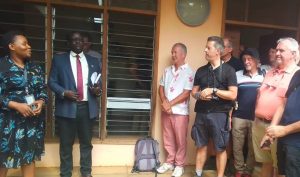
In an inspiring example of global solidarity and compassion, a group of 30 Irish drivers under the banner of Friends of Ambrose Blain has raised over €107,000 (more than 400 million Uganda shillings) to support palliative care initiatives in Uganda. Their contributions are not just a gesture of goodwill but a lifeline for Hospice Africa Uganda, an organization dedicated to improving the quality of life for patients facing serious illnesses.
Prossy Nakyanja, Executive Director of Hospice Africa Uganda, expressed her gratitude and relief at the timely donation, raised through a unique fundraising campaign, “Drive for Hospice.” According to Nakyanja, this initiative will help address a significant budget gap for the 2024/2025 financial year.
The organization had been forced to scale back its palliative care activities due to financial constraints, including essential programs such as daycare services, community outreach, and home visits. These services, which directly benefit 500 to 1,000 patients across Uganda, aim to alleviate physical pain and emotional distress while fostering social and spiritual well-being.
Nakyanja emphasized that the funding will enable the resumption of these critical services. “With this support, we can once again bring hope and dignity to those in need, reaching patients in remote areas who otherwise lack access to specialized care,” she said.
Despite the progress, Nakyanja acknowledged a persistent challenge: the misconception surrounding palliative care. Many Ugandans wrongly associate it solely with end-of-life treatment, leading to hesitancy and stigmatization.
“We need to demystify the idea that palliative care is only for the dying,” she explained. “It’s about improving the quality of life at every stage of serious illness by addressing physical, emotional, and spiritual needs.”
Hospice Africa Uganda has launched advocacy campaigns to educate communities about the broader scope of palliative care, ensuring it is perceived as a vital part of holistic health.
The fundraising effort by the Irish drivers also carried a unique element of adventure. Led by John O’Kelly, the team embarked on a remarkable journey, driving ambulances donated by the Japanese government from Dar es Salaam, Tanzania, to Kampala, Uganda. This cross-country drive not only symbolized the spirit of giving but also drew attention to the critical need for accessible healthcare in Uganda.
O’Kelly described the initiative as a meaningful way to combine adventure with purpose. “It’s not just about the funds we’ve raised but the message we’re sending: that every individual can make a difference, no matter how far away they are,” he said. The donated ambulances will enhance the Ministry of Health’s capacity to provide emergency and palliative care, especially in underserved areas.
While the donation is a significant step forward, the Irish team and Hospice Africa Uganda are determined to create sustainable solutions for long-term impact. O’Kelly revealed plans to develop future adventure programs aimed at raising even more funds and fostering global awareness about palliative care.
Hypothetically, these programs could include a series of international drives, engaging communities along the routes to learn about the importance of palliative care. Workshops, health fairs, and storytelling sessions could be organized to bridge cultural gaps and encourage local involvement in healthcare initiatives.
Hospice Africa Uganda is also exploring innovative ways to ensure financial sustainability, such as setting up income-generating projects and partnerships with local businesses. These efforts aim to reduce reliance on external donations while empowering communities to take ownership of healthcare initiatives.
The Irish drivers’ contribution highlights the importance of collaborative solutions to global health challenges. However, the need for greater investment in palliative care remains urgent. Nakyanja called on the Ugandan government and private sector to prioritize this often-overlooked aspect of healthcare.
“Palliative care is not a luxury; it’s a necessity for human dignity,” she said. “With collective effort, we can ensure that no one suffers needlessly, regardless of their circumstances.”
This initiative also serves as a model for international cooperation, showing how individuals and organizations can come together to address critical issues. By combining resources, expertise, and compassion, the Friends of Ambrose Blain and Hospice Africa Uganda are not only changing lives but also setting a precedent for a more inclusive and empathetic world.
As the ambulances roll into Uganda, they carry more than just medical equipment they carry hope, resilience, and the promise of a better future for thousands of patients. The journey of the Irish drivers is a reminder that when people unite for a common cause, the impact transcends borders, inspiring a ripple effect of generosity and change.