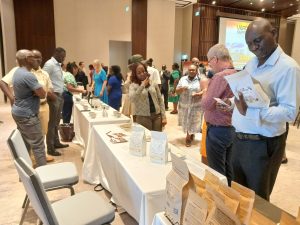
Uganda is seeking to strengthen its coffee exports to the United Kingdom and Ireland through direct commercial partnerships with international buyers, roasters, importers and distributors.
A delegation of coffee buyers, roasters and industry stakeholders from the two countries is in Uganda to explore trade and investment opportunities across the coffee value chain, with a focus on expanding market access, increasing export volumes and attracting investment in value addition.
Ambassador Steven Nkayivu Ssenabulya said the initiative is informed by Uganda’s Economic and Commercial Diplomacy Strategy, national development priorities and the need to identify new markets as domestic coffee production continues to grow.
“One of the objectives of Uganda’s Economic and Commercial Diplomacy Strategy is to identify and pursue new market opportunities for Ugandan products in key international markets, with a focus on increasing Uganda’s export value by 30 per cent by 2030,” he said.
He added that the initiative supports the Fourth National Development Plan, particularly its emphasis on empowering the private sector to drive economic growth and create employment. “Our intention with this activity is to bring private sector players on both sides together to discuss business,” Ssenabulya said.
He noted that Uganda’s expanding coffee production, supported by the national coffee roadmap, requires the country to identify additional buyers while strengthening its presence in existing export markets. To guide its market expansion strategy, the Ugandan High Commission in London commissioned research into the coffee sectors of the UK and Ireland to identify opportunities and interventions that could improve Uganda’s export performance.
According to Ssenabulya, the research established that Uganda’s coffee exports to the UK had been declining since around 2017, highlighting the need to reverse the trend by increasing both export volumes and earnings.The research indicated that the UK imported coffee worth approximately US$1.4 billion in 2024, equivalent to about 210,000 tonnes, with roasted coffee accounting for approximately US$639.9 million.
Ireland, meanwhile, imported about 21,000 tonnes of coffee valued at approximately €196 million during the same period.
Uganda’s coffee exports to the UK stood at an estimated US$6.9 million, representing approximately 1,396 tonnes in 2024, according to figures presented at the engagement.
Ssenabulya said the figures demonstrate significant untapped potential for Uganda to increase its market share, particularly through value addition and stronger commercial partnerships. The market research recommended building relationships with coffee importers, roasters, cafés and speciality distributors to improve Uganda’s competitiveness in the two markets.
He said the Kampala engagement was intended to establish these business relationships, adding that the High Commission planned to organise additional trade missions and business engagements in the UK and Ireland, depending on the success of the initiative.
Assistant Commissioner for Coffee Quality Assurance and Value Addition, Gordon Katwirenabo, said the familiarisation mission presented an opportunity to translate Uganda’s diplomatic relations with the UK and Ireland into tangible economic benefits. “Uganda deeply values the contribution of both countries to our national development and remains committed to strengthening these relationships through trade, investment and cooperation,” he said.
Organised by Uganda’s High Commission in London, the mission will enable the visiting buyers to interact directly with Ugandan coffee farmers, cooperatives, processors and exporters. The delegation is also expected to visit coffee-growing areas to understand the journey of Ugandan coffee from farm to cup.
Katwirenabo said the engagements were expected to generate new coffee export orders, attract investment in processing facilities and promote greater value addition within the country. He encouraged the visiting delegation and Ugandan private sector players to use the business-to-business meetings to identify practical areas of cooperation and establish lasting commercial partnerships.
Meanwhile, British High Commissioner to Uganda Lisa Chesney reaffirmed the United Kingdom’s commitment to supporting Uganda’s coffee industry through stronger commercial partnerships, responsible investment, improved quality and sustainability, and expanded access to international markets.
She noted that Uganda’s coffee industry was emerging as a significant trade and investment opportunity, with the country exporting 8.1 million bags of coffee valued at US$2.1 billion over the last year. Chesney emphasised the importance of looking beyond export figures to recognise the farmers, cooperatives, women, exporters and communities whose work sustains the coffee industry.
She said Uganda’s coffee sector presents opportunities for investors seeking both commercial returns and meaningful social and economic impact. The British High Commissioner further highlighted the need to increase the presence of Ugandan coffee in British, international and domestic markets, particularly through products that generate greater value beyond the export of raw coffee beans. She also identified Uganda’s domestic coffee market as an important area for growth, noting that increased local consumption could deliver significant economic benefits to farmers and other players across the value chain.