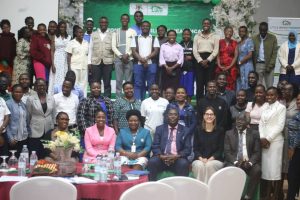
BY D KASULE: Uganda’s health sector is increasingly turning its attention to the human side of care, with the government pledging renewed support to promote soft skills and self-care among health workers nationwide. The shift was underscored at the opening of the Second National Soft Skills in Healthcare Conference, where policymakers, health professionals, and development partners convened to explore how improved communication, empathy, and emotional well-being can enhance patient care.
A message from Health Minister Jane Ruth Aceng, delivered by Dr. Joseph Okware, emphasized that quality healthcare extends beyond medicine and equipment to include how patients are treated. “For a long time, we have focused on technical skills diagnosing and treating disease,” Dr. Okware said. “But we continue to receive complaints from patients about rude health workers, poor communication, and lack of empathy. This is where soft skills come in.”
The conference, supported by Little Winnie Foundation, reflects a growing shift in the health system. While traditional discussions have focused on infrastructure, drug supplies, and diagnostics, attention is now also turning to the well-being and attitudes of health workers.
At the core of this shift is a simple but powerful idea: health workers who are stressed, exhausted, or emotionally drained cannot deliver quality care. “You cannot pour from an empty cup,” the Minister noted in her message. “Even the most highly trained clinician cannot perform well if they are burnt out.”
Findings from the inaugural 2025 conference revealed that more than 70 percent of nurses felt unprepared to manage emotional fatigue and ethical challenges in their work. In response, the Ministry of Health has committed to several practical measures aimed at embedding soft skills into the healthcare system. These include partnering with professional bodies such as the Uganda Nurses and Midwives Council to integrate soft skills and self-care into continuous professional development programmes.
The Ministry also plans to revise training curricula to ensure that graduates from medical and nursing schools are equipped with both technical expertise and interpersonal skills. Hospitals and training institutions will further be encouraged to introduce mentorship programmes, wellness sessions, and designated spaces for staff self-care.
Mental health support for health workers is also set to expand, with plans to incorporate counselling services and peer support networks into the national human resources for health strategy. Officials stressed that improving attitudes in healthcare requires collective effort beyond government.
A new initiative, the Little Winnie Fund, has been launched to mobilize resources for training, mentorship, and resilience-building among frontline health workers. Dr. Okware called on the private sector and the public to support the initiative. “If you are a leader in business, support these programmes. If you are a citizen, your contribution however small can make a difference,” he said. The conference also acknowledged that negative attitudes among health workers often stem from systemic challenges such as heavy workloads, low pay, and stressful working conditions.
Winnie Nabukera, a nurse and founder of the Little Winnie Foundation, said the initiative combines training with advocacy to address both personal and structural issues. “We are working on mindset change, but we are also advocating for better staffing, improved pay, and supportive work environments,” she said. “Health workers need both skills and support.”
She added that stress from personal life can also affect interactions with patients, making self-care an essential component of professional practice. Regulators emphasized that soft skills are critical to delivering professional and compassionate healthcare. Officials from the Uganda Nurses and Midwives Council noted that nurses and midwives who spend the most time with patients play a central role in shaping patient experiences. “Patients want to be treated with respect and kindness,” a council representative said. “Soft skills determine how they experience care and how they judge the entire system.”
The conference is expected to generate recommendations to guide future training and policy decisions. With government backing and growing partner interest, organizers say the soft skills movement is gaining momentum and could soon reach health facilities across the country, including rural areas.
As Uganda continues to invest in modern hospitals and medical technology, officials say equal attention must be given to the people delivering care. “If a patient meets a burnt-out and unsupported health worker, then we have failed,” the Minister’s message warned. According to Aceng, when caregivers are cared for, they are better positioned to provide the quality healthcare every Ugandan deserves.